
Publication Date 2026-06-30
Researchers Hong-Il Lee
Why value transformation?
A Sociological Approach to Value Transformation
A Humanistic Approach for Value Transformation
Exploring the Direction and Tasks of Value Transformation
<Table of Contents>
Chapter 1: Why Value Transformation?
1. Introduction: Searching for the Linchpin of Innovation in the Construction Industry
2. The System of Strategies for the Rebirth of the Construction Industry
3. The Need for a Major Value Transformation in the Construction Industry
4. The Concept of a Major Value Transformation in the Construction Industry
5. The Purpose of Writing This Book and Its Approach
6. The Linchpin Hypothesis to the Success of Innovation in the Construction Industry
Chapter 2: A Sociological Approach to Value Transformation
1. Implications of Success Factors and Core Values for General Industry and National/Social Innovation
2. Theoretical Implications of the Social Development Stage Theory and Core Values
3. Derive core values for value transformation
Chapter 3: A Humanistic Approach to Value Transformation
1. Implications of the Core Values from a Humanities Perspective
2. Implications of ESG Management and Core Values
Chapter 4: Exploring Directions and Tasks for Value Transformation
1. Eight Core Values for the Rebirth of the Construction Industry
2. Directions for Improving Structural Problems in the Construction Industry through the Application of Core Values
3. Implementation Tasks for Improving Structural Problems in the Construction Industry through the Application of Core Values

Publication Date 2026-04-07
Researchers CERIK
The Industrial Revolution and the Construction Industry: A Period of Great Transformation—How Has Construction Changed, and What Is the Problem?
An Intelligent Link Between the AI Paradigm Shift and Innovation in the Construction Industry
A New World of Construction Painted by AI
The Direction of the Role of Government and Companies in Preparing for the Era of Construction AI
Construction Industry Rebirth 2.0
▷ Reemphasizes and elaborates on the fundamental changes in expanding the scope of the construction industry, workers, technology, and systems
▷ Proposes expanding housing supply and a major transition plan based on AI technology
[Comprehensive Overview] Publication of a planned publication to lead industrial change and build public consensus
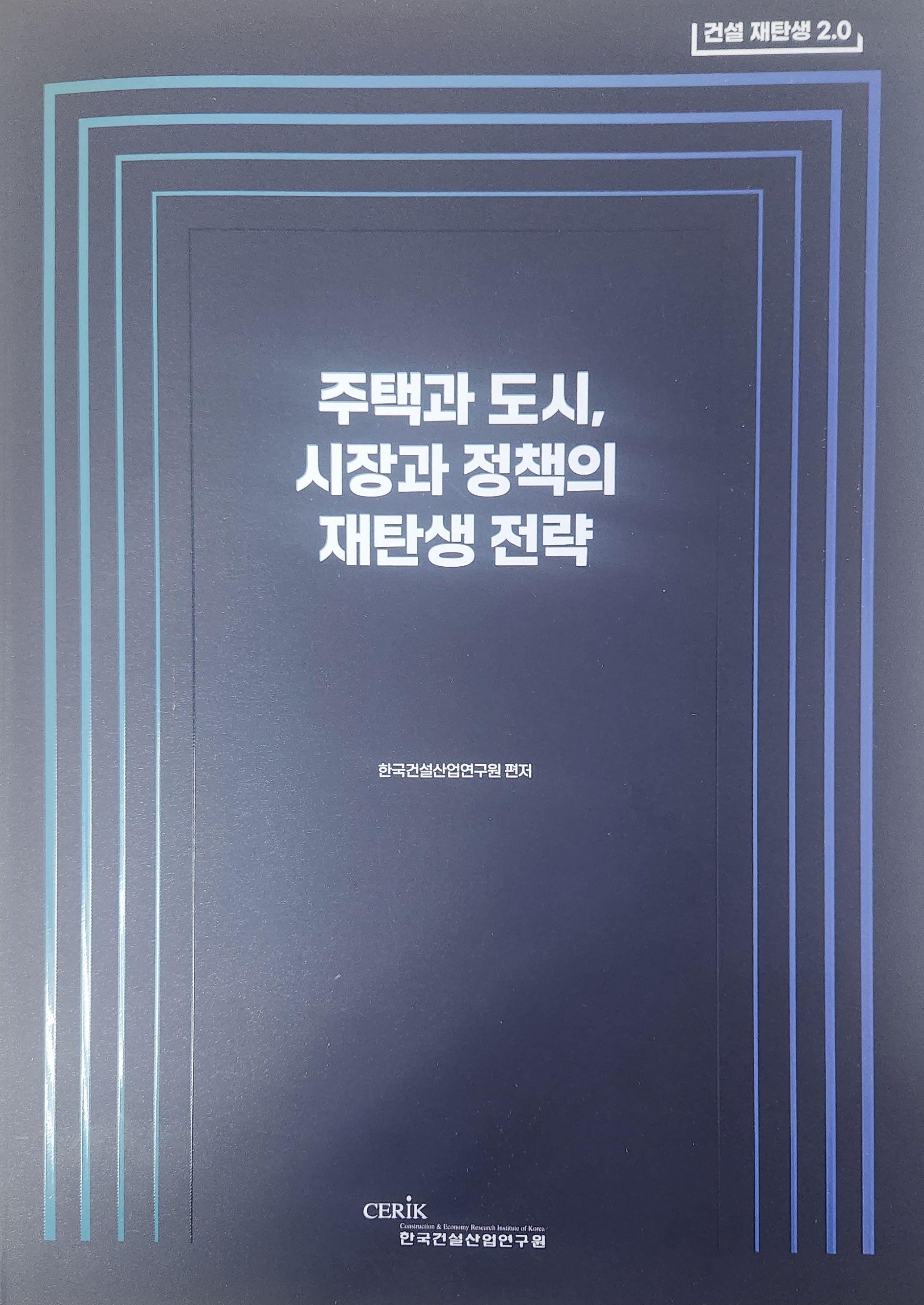
- “Housing and Urbanism: Strategies for the Rebirth of Markets and Policy”
- “The Rebirth of the Construction Industry 2.0: General Overview”
- "How the AI Era is Changing the Construction Industry"
<Table of Contents>
Part 1. The Industrial Revolution and the Construction Industry: A Period of Great Transformation—How Has Construction Changed, and What Is the Problem?
Part 2. The Intelligent Link Between the AI Paradigm Shift and Innovation in the Construction Industry
1. Changes in the AI Technology Paradigm and the Present
2. The AI Platform Hegemony Race and Industry-Leaders’ AI Innovation Strategies
3. Core Capabilities of Artificial Intelligence and Practical Challenges
4. What is AI for the construction industry?
Part 3. A New World of Construction Imagined by AI
1. A New Construction Order Created by the Client
2. The Future Landscape of Design and Service Providers Redesigned by AI
3. From Procurement to Platform: The Restructuring of Suppliers
4. A Construction Site Without Failures
Part 4. The Direction of the Roles of Government and Companies in Preparing for the Era of Construction AI
1. Policy and Institutional Direction ① The Key to Success in Construction Project AX: The Data Ecosystem
2. Policy and Institutional Direction ② Restructuring the Production Segmentation Structure That Cannot Be Delayed: Transitioning to an Integrated System Suitable for the AI Era
3. Policy and Institutional Direction ③ Saying Goodbye to Outdated Norms in the Era of AI Construction
4. Policy and Institutional Direction ④ R&D Adding Intelligence to Construction, the Starting Point for the Rise of the AI Industry
5. Policy and Institutional Direction
⑤ In the AI era, a “renaissance for the prepared” and a “devastating crisis for those who are not”
6. Corporate Response Strategies ① AI Drives Management Innovation in Construction Companies
7. Corporate Response Strategy ② Talent Management for Competitive Construction Companies in the AI Era
8. Corporate Response Strategy ③ In the AI Era: Corporate Financial Environment and the Financial Strategy of Construction Companies
9. Corporate Response Strategy ④ Building Innovative Business Strategies for Construction Companies through AI
10. Corporate Response Strategy ⑤ In the AI Era, Strategies for Innovating Organizational Culture in Construction Companies

Publication Date 2026-04-07
Researchers CERIK
The operating system that runs a nation, the construction ecosystem
The System and Outcomes of Construction Industry Rebirth 1.0
The Era of Great Transformation and the Structural Challenges of the Construction Industry
From Discourse to Action: The Vision and Framework of the Vision for the Rebirth 2.0 of the Construction Industry
The Three Pillars for Implementing the Rebirth 2.0 of the Construction Industry
<Table of Contents>
Chapter 1. The Operating System That Drives the State: The Construction Ecosystem
1. Why must we redefine construction
2. All growth begins in construction
3. The Construction Industry Facing the Limits of Its Mode of Growth
4. The Future of the Construction Industry Rebuilt on Trust
Chapter 2 The Rebirth of the Construction Industry: The System and Outcomes of 1.0
1. Background of the Promotion of the Construction Industry Rebirth 1.0
2. The System and Tasks of the Rebirth 1.0 of the Construction Industry
3. Achievements and Lessons from the Rebirth of the Construction Industry 1.0
Chapter 3: The Era of Great Transformation and the Structural Challenges to the Construction Industry
1. In an era of great transformation, what is the role of construction
2. A Warning from the Market: A Rift in the Industrial Ecosystem
3. Industrial inefficiency caused by fragmented institutions and conflict structures
4. In the AI Era, Pressure for the Transformation of the Construction Production System
5. The Need for the Rebirth 2.0 of the Construction Industry
Chapter 4 From Discourse to Action: The Vision and Framework of the Vision and System for the Rebirth 2.0 of the Construction Industry
1. The Direction and Vision of the Rebirth 2.0 of the Construction Industry
2. Construction Industry Rebirth 2.0 Strategic Task Framework
Chapter 5: The Three Foundations for Implementing the Rebirth 2.0 of the Construction Industry
1. People: Core industrial values and a shift in perception
2. Governance: A collaborative structure that leads industrial transformation
3. Technology: Digital transformation of industrial operating systems
Chapter 6 Conclusion and Recommendations
1. The Golden Time for the Rebirth of the Construction Industry 2.0
2. The Meaning and Direction of the Rebirth 3.0 of the Construction Industry
Publication Date 2026-03-18
Researchers CERIK
A Paradigm Shift in Housing and Urbanism, Market and Policy
Strategies for Normalizing Housing Supply and Expanding the Base of Demand
A Major Shift in Urban and Urban Development Policies: From Housing Redevelopment to Urban Competitiveness
<Table of Contents>
Chapter 1. Introduction
Chapter 2. A Paradigm Shift in Housing and Urban, Market and Policy Perspectives
1. The Importance of Housing and Urban Innovation
2. Housing and Cities, Construction Rebirth 2.0
3. Policy Changes and Evaluation
4. Structural Diagnosis and Limitations
5. Directions for the Great Transformation of Housing and the City
Chapter 3. Strategies for Normalizing Housing Supply and Expanding the Base of Demand
1. Conditions and Mission for a Major Paradigm Shift in Housing Policy
2. Vision and Strategic Direction for a Major Policy Shift to Achieve Housing Stability
3. Detailed Action Tasks for a Major Transformation of the Housing System
4. Expected Effects
Chapter 4. A Major Shift in Urban and Urban Renewal Policies: From Housing Redevelopment to Urban Competitiveness
1. The Need for a Major Shift in Urban and Urban Development Policies in a Rapidly Changing Era
2. Major Transformation of the Urban Renewal System: Consolidation and Abolition of Overlapping Systems and a Comprehensive Approach
3. Major Shift in Urban Renewal Projects: Rapid and Smooth Project Implementation through Innovation at Every Stage
4. Conclusion: Toward a Great Transformation Centered on People, Governance, and Technology
Chapter 5. Conclusion
Publication Date 2025-10-20
Researchers Keun-Yong Eom
The domestic economic situation and regional situation were analyzed, the necessity and effectiveness of infrastructure investment were reviewed, and accordingly, the direction of infrastructure investment and financial resources were derived.
- In the domestic economy, a decrease in construction investment leads to a contraction in consumption, economic growth is expected to slow down to 0% in 2025, and growth is expected to continue in the mid- to long-term.
- The regional economic slowdown is even more serious as local population declines, population movements continue to occur to the metropolitan area, and capital outflow to the metropolitan area is also expanding. In addition, local life SOC has improved due to the promotion of balanced national development policies, but it is still insufficient compared to the metropolitan area.
- In addition, aging infrastructure is increasing rapidly amid increased precipitation and increased frequency of earthquakes due to climate change.
- Infrastructure investment greatly contributes to inducing a virtuous economic cycle, strengthening productivity, and balanced regional development, and directly affects the safety and quality of life of the people.
- Major developed countries such as the United States, the United Kingdom, and the European Union have approached it as a strategy to simultaneously pursue economic stimulus and future competitiveness through infrastructure investment.
- The analysis of the appropriate SOC investment size based on the endogenous growth model may be overinvested compared to the appropriate size due to a decrease in demand due to economic contraction in the short term, but it is analyzed that about 500 billion won per year is insufficient than the investment forecast when considering the achievement of the economic growth target.
- Meanwhile, maintenance costs are expected to continue to increase due to the increase in aging infrastructure, and maintenance of national and local government management facilities is estimated to reach 1,000 trillion won from 2021 to 2050.
It is estimated that in 2040, maintenance costs will be required at the current SOC budget of around 25 trillion won.
- Accordingly, it is necessary to prepare financial resources for maintenance costs of old infrastructure and investment in new infrastructure at a certain level, and to this end, it is suggested to supplement financial investment by revitalizing private investment projects, along with expanding tax sources of transportation, energy, and environmental taxes, and mandatory accumulation of performance improvement provisions.
Although the expansion of transportation, energy, and environmental taxes is not large, it is expected to improve from the present through the use of private investment projects and adjustment of the size of facilities to be invested.
Accumulation of performance improvement provisions is expected to reduce maintenance costs in the long run by extending the period of use through performance improvement before the infrastructure degrades.
- Finally, this paper presents three major directions for infrastructure investment.
First, it is suggested that the scale of SOC investment needs to be expanded to transition from the current economic cycle structure to the economic cycle structure.
Second, it is suggested that active utilization through the revitalization of private investment projects is necessary to supplement regional balance and fiscal investment.
Third, in order to improve the safety and quality of life of the people, it is proposed to improve old infrastructure, improve local settlement conditions, and create an environment that can promote local consumption of residents in the metropolitan area.
Publication Date 2025-08-19
Researchers Cheol-Han Park , Ji-Hye Lee, Kyoung-Youn Na
□ The Korea Institute of Construction Industry (Director Lee Choong-jae) predicted on the 18th that domestic construction orders will expand from 193.3 trillion won in 2025 to 304.7 trillion won in 2040.
- The forecast was derived by comprehensively analyzing economic growth rate, demographic change, and social variables, and compared and analyzed the annual average growth rate (CAGR) for the past (2010-2025) and the future (2025-2040) period for 12 detailed types of industries.
□ The report was planned as part of the "Rebirth Study of the Construction Industry," which seeks long-term visions and re-leap strategies for the construction industry.
- Based on construction orders, the future construction market by 2040 was projected from a mid- to long-term perspective at a time when the fundamental value of the industry and the full-scale transformation of the production system were required. Through this, it was intended to share the necessity of preemptive response to future changes in the social, economic, and technological environment with both construction participants and stakeholders.
□ The Korea Development Institute cited ▲ large-scale national projects ▲ expansion of smart and digital construction ▲ expansion of demand for eco-friendly and carbon-neutral infrastructure as major factors driving future growth in the construction industry.
- This study presents the results of forecasting the order size for all construction projects in the construction industry by construction type (Daegong type and detailed construction type) and period from 2025 to 2040, and along with these forecast results, provides changes in construction orders and major factors.
Publication Date 2025-07-14
Researchers Yoo-Kyung Sung , Hee-Dae Park, Soo-Young Choe
The construction industry's workforce structure and technology environment are changing differently from the past, and in this study, the construction industry's technical manpower problem was approached as a long-term task to respond to changes in the industrial structure and future environment, not a short-term labor supply and demand imbalance.
Therefore, this study established a strategy to secure construction talent to lead the future amid changes in the construction industry, and derived an implementation task to secure technical manpower in the construction site. The detailed objectives of this study are as follows.
First, it understands the actual condition of technical manpower in construction sites. The current status of the manpower shortage that is continuously raised in the industry is confirmed in detail, and in particular, it investigates areas where the shortage of technical manpower in construction sites is intensifying.
Second, it analyzes various factors that may affect the future construction site technical manpower problem. In addition to the poor working conditions that have been mainly pointed out, understand the background that has caused the shortage of manpower.
Third, in order to solve the problem of technical manpower in construction sites, we propose an implementation task that the construction industry can take the lead in. Through this, it is intended to reduce dependence on government policies and create a manpower ecosystem that prepares the future of the construction industry with the industry as the center.
- This study conducted the following analysis to derive strategies and execution tasks.
Through the analysis of existing research (Chapter 2) and the analysis of future issues (Chapter 3), the factors affecting the current status of technical personnel at construction sites were analyzed.
Quantitative analysis was performed through the supply and demand analysis of construction technical personnel (Chapter 4) and the actual condition survey of technical personnel at construction sites (Chapter 5).
Other industries' responses to future issues (Chapter 3) and major foreign countries' responses (Chapter 6) were investigated, and through this, strategies for securing construction talent and implementation tasks (Chapter 7) for securing technical personnel at construction sites were presented.
Publication Date 2025-04-25
Researchers Hong-Il Lee
To preserve biodiversity, which has recently emerged as a key task in ESG management, a five-step promotion model for "Nature Positive Management" that construction companies can introduce is presented
- The model was developed by comprehensively analyzing global standards and guidelines, major domestic and foreign construction companies, and systematically analyzing detailed activities, procedures, and implementation methods for each step
Biodiversity is a concept that encompasses species, genes, and ecosystem diversity, and Nature Positive means conserving and restoring damaged natural capital, that is, biodiversity and natural resources to stop net loss and convert to net positive
Propose a five-stage model of Nature Positive Management that should be introduced by construction companies as follows
① Establish mid- to long-term objectives and roadmaps
② Establishing an organizational system to achieve goals
③ Establishment and implementation of activity plan
④ Performance measurement and feedback
⑤ Enhance external disclosure and transparency
Publication Date 2025-04-11
Researchers
PART 1. Transformation of the Industrial System
A Direction of Unfair Improvement for Co-prosperity and Co-prosperity in Construction Industry
A long time ago, but a task to be solved, proper air conditioning and construction cost realization
Excessive construction regulatory reforms that place importance on individual values and easy policy objectives, and restrict the industry
Changes in the Future Construction Industry and Industrial Structure for the Realization of Convergence and Expansion
SOC Investment for Safe and Sustainable Korea
Revitalization of Private Investment Projects Complementing Fiscal Investment
Need to Change Paradigm to Strengthen Global Competitiveness in Overseas Construction Industry with 60 Years of History
A 考 on Smart Construction Technology Revitalization and a Reasonable Direction
A Rational Research and Development (R&D) Direction for the Advancement of Construction Technology
Advancement of Public Procurement for Innovation in Construction Industry
Evaluation and Improvement of Human Resources Development Policy in Construction Industry
Negative image and deterioration of awareness threatens sustainability, innovative change and long-term approach required
Establishment of an advanced construction safety culture through the establishment of a cooperative safety management system
PART 2. Market and product conversion
Paradigm Shift in Housing Market, Product Innovation and Evolution of Construction Industry
Urban Space Redesignation and Market Products Transformation Strategy
Construction Finance Structural Innovation and Sustainability Challenges
Publication Date 2025-03-18
Researchers CERIK
Beyond simple civil engineering, the construction industry is an important infrastructure industry that supports the national economy, forms the basic environment of society, and determines the quality of life of its people. However, in the face of unprecedented crises and changes, the construction industry is at a critical turning point in designing values and sustainable futures for the new era.
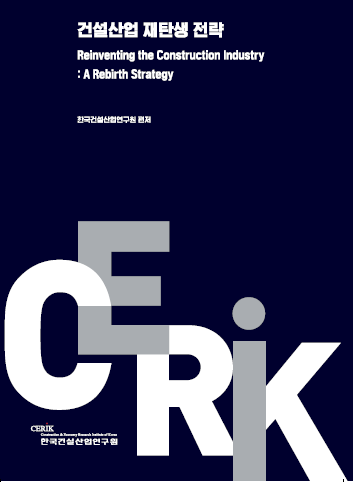
In response, the Korea Institute of Construction Industry has published Reinventing the Construction Industry: Rebirth Strategy. The report contains strategies and systems to shift away from the existing growth model to value-oriented industries, secure sustainability, and revive the construction industry in a new paradigm.
The challenges and crises facing the construction industry today are complex. Structural problems such as low growth, shrinking real estate market, stagnant technological innovation, labor shortage, and falling productivity, as well as huge trends such as digital transformation, eco-friendly paradigms, ESG management, and demographic changes are reshaping the entire industry. It is no longer an era in which traditional methods alone cannot guarantee sustainable growth.
Amid these changes, the direction of the construction industry is very clear. It is a transition from simple survival to a national future industry that focuses on social values and sustainability. Based on the vision of a "national industry that builds the people's future," the construction industry's re-leap strategy focuses on the four major goals (Responsible: Responsible, Revolutionary: Pursuing Innovation, Reliable: Trusted Enterprise, Resilient: Leap) and the three principles (Fair and Coexistence, Convergence and Expansion, Autonomy and Innovation).
First, re-establishing industrial value - The construction industry should shift from a simple construction industry to one that puts people first. Not only technology and capital, but also the value of people should be the center of the industry. For this, it is essential to cultivate skilled manpower, improve working environment, and establish a fair and safe industrial culture.
Second, a major transformation of the production system - improvement of existing disconnected construction processes and establishment of a production system that strengthens connectivity and cooperation. It is necessary to create an environment where various actors can collaborate smoothly while improving excessive regulation and unfair factors. Through this, it is necessary to form an industrial structure incorporating high-tech technologies to increase productivity and efficiency.
Third, innovation in the construction market and products - we need to shift the paradigm of construction products and services by shifting to a consumer-oriented mindset. We need to actively introduce sustainable construction technology and combine digital technology with smart construction systems to strengthen our global competitiveness. Through this, the construction industry should establish itself as an industry that realizes a smarter and more sustainable society.
The rebirth of the construction industry is not just an innovation, but a process of transformation that fundamentally redesigns the industry based on new principles and philosophy. To realize this, the government and the private sector must establish governance in cooperation and support research and policy implementation.
The Korea Construction Industry Research Institute will do its best to establish the construction industry as a value-oriented sustainable industry in this journey of change. We will actively work with various stakeholders such as the government, local governments, and industry-academic associations to make the construction industry leap forward as a core industry that creates the future.
We hope that Strategy for the Rebirth and Innovation of the Construction Industry will provide meaningful insights and practical solutions to all those who are overcoming the current crisis and contemplating the future of the construction industry.